

During winter, pond owners must prevent full ice coverage to protect fish health.
Maintaining an open hole in the ice allows vital gas exchange, with oxygen entering the water and carbon dioxide, along with toxic gases, escaping.
Two main tools address this need: a pond de-icer and a diffused aerator system.
Many pond owners ask which option fits their situation.
Climate conditions, pond size, water depth, and access to electricity determine the correct choice.
| Feature | De Icer | Diffused Aerator System |
|---|---|---|
| Purpose | Melts a hole in ice | Prevents ice via surface agitation |
| Oxygenation | Yes | Yes |
| Energy Usage | High 250 do 1000 W | Low 5 do 40 W |
| Use Year Round | No | Yes |
| Ease of Installation | Very easy | Moderate |
| Extreme Cold Reliability | Excellent | Limited |
| Ideal For | Small and shallow areas, dock and skimmer zones | Larger and deeper ponds, remote use |
| Safety | Requires in water electricity | Shore powered, safer |
| Maintenance | Minimal plug in and out | Requires seasonal diffuser relocation |
What is a De-Icer?
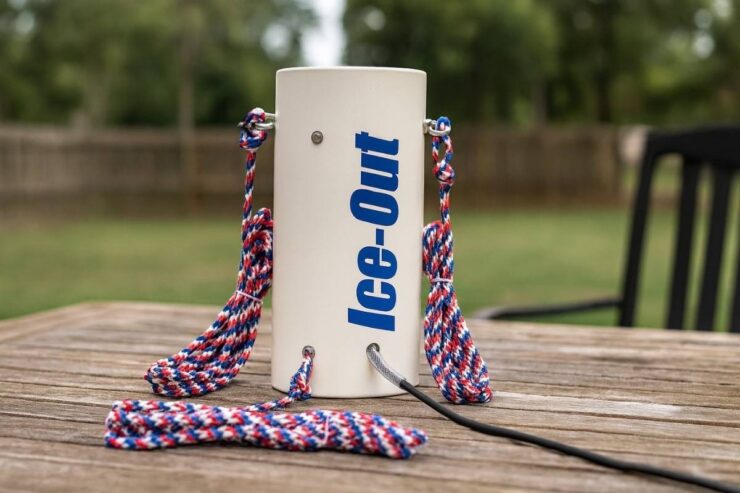
A de-icer, often called a pond heater, uses electricity to melt an opening in surface ice by warming a confined area around the device.
The operation targets gas exchange rather than raising overall water temperature, which protects fish without disrupting deeper thermal layers.
Most designs float on the surface or rest just below it, allowing heat to concentrate where ice forms first. Installation works best before full ice coverage develops, since early placement prevents dangerous gas buildup and avoids cutting through thick ice later.
Use as a secondary system proves valuable during severe cold spells, especially when aeration struggles to keep water open.
Thermostatic controls further refine performance by activating the unit only as temperatures approach freezing, reducing wasted energy and unnecessary runtime.
Benefits of De-Icers
Winter pond protection often depends on equipment that performs consistently under harsh conditions with minimal intervention.
De-icers meet this need by focusing on surface ice control and reliable gas exchange, even during prolonged freezing periods.
Several advantages make these devices a practical choice for cold climates and demanding winter scenarios.
1. Reliable Performance in Extreme Cold
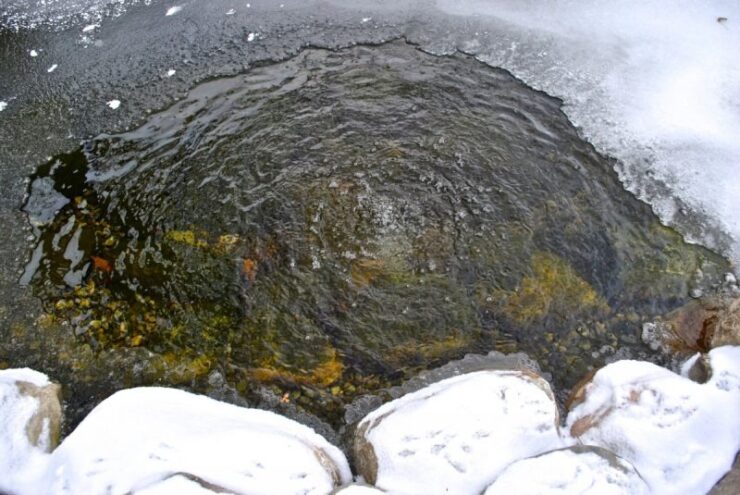
Several performance characteristics make de-icers dependable during harsh winter conditions. Consistent function continues even during prolonged sub-zero temperatures, which supports fish survival when surface ice thickens rapidly.
Reliability remains high during overnight freezes and extended cold snaps that overwhelm other winter pond equipment.
Stable operation during extreme cold provides peace of mind when weather conditions change quickly.
2. Supports Oxygenation and Gentle Water Movement

By keeping an opening in the ice, a de-icer helps promote oxygen exchange at the water’s surface and encourages subtle water movement below.
It improves overall oxygen availability for fish, even in winter conditions. In many cases, de-icer is much more powerful than other types of aerators.
The continued circulation helps distribute oxygen more evenly throughout the pond, which is especially beneficial in heavily stocked ponds and deeper areas.
3. Simple Installation and Operation
Ease of use plays a major role in winter equipment selection. Setup remains simple, since proper placement and a power connection complete the installation.
No complex plumbing, tubing, or seasonal repositioning is required, which reduces setup time and limits user error.
Floating or near-surface placement allows immediate operation once plugged in, making de-icers suitable for quick deployment before or during early freeze conditions.
4. Controlled Heat Output and Safety Features
Heat control and physical protection define the technical strengths of modern de-icers.
Output and safety details matter most during selection, especially when balancing effectiveness with energy use and pond protection. Several measurable traits help clarify expected performance:
- Typical power range falls between 250 and 1000 watts, depending on unit size
- A 300-watt model can melt approximately one inch of ice per hour
- Protective cages prevent contact with liners, docks, or structural components
Thermostatic regulation allows heat generation only when water temperatures approach freezing, which limits unnecessary runtime and reduces wear on internal components.
Built in safety features help prevent accidental damage to pond infrastructure.
5. Effective Use Around Structures
Targeted ice control proves especially useful near fixed structures.
Use around boats, docks, and skimmers proves effective, particularly in shallow ponds with at least six feet of depth.
Focused heat protects mechanical components, reduces pressure damage caused by expanding ice, and keeps critical access points open during winter.
Modular construction allows easy relocation when ice patterns change or problem zones shift across the pond surface.
Drawbacks of De-Icers
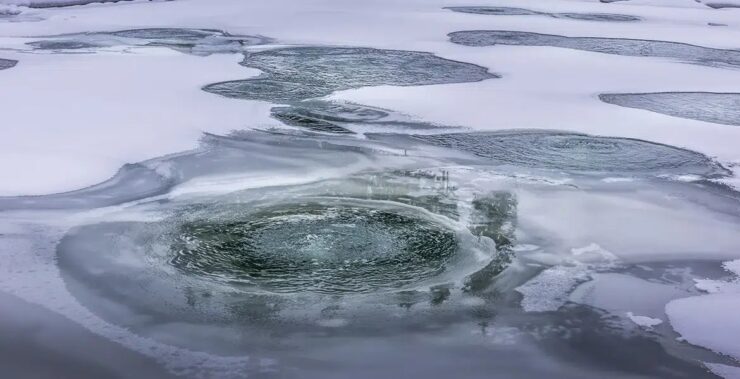
Despite dependable performance, de-icers present several limitations that affect long-term operating costs and overall pond health.
Evaluating these drawbacks helps determine proper placement within a broader winter management plan.
1. High Energy Consumption
Energy demand represents the primary limitation of de-icer use, since continuous operation can raise winter electricity costs.
Larger units draw substantial wattage, which accumulates quickly during extended cold periods.
Long term reliance on high-wattage devices can strain electrical systems and increase monthly utility expenses.
2. Limited Seasonal Value
Function remains limited to colder months, offering no benefit once ice risk passes.
Removal and storage become necessary during warmer seasons, which reduces year-round usefulness compared to multipurpose pond equipment.
3. Dependence on Power Access
Access to electricity also affects placement options. Remote ponds or large lakes require long power runs or additional infrastructure, which increases cost and limits flexibility.
Power outages during winter storms can also interrupt operation at critical times.
What is a Diffused Aerator System?
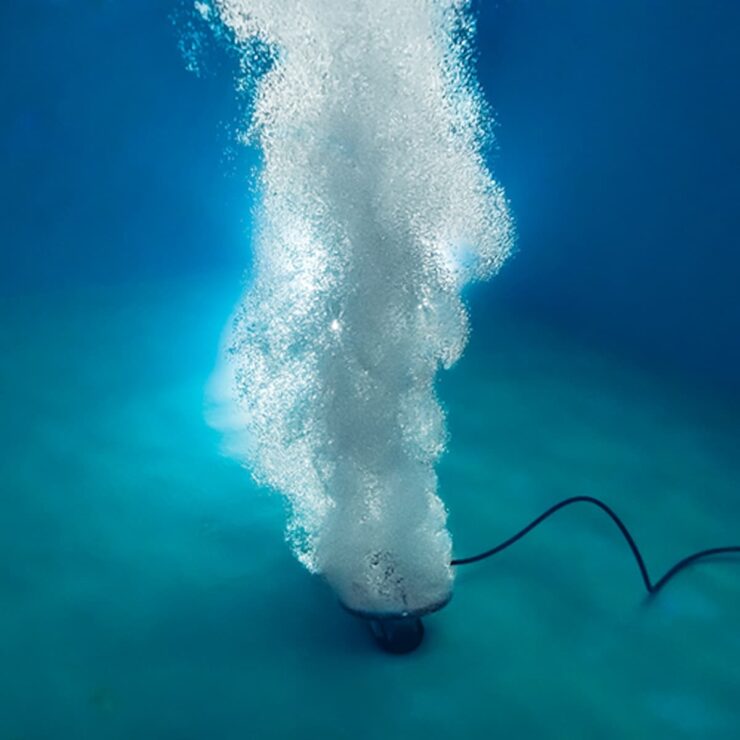
An aerator uses an air pump connected to submerged diffusers that release steady streams of bubbles.
Rising air pulls water upward, creating circulation that disrupts ice formation at the surface while improving oxygen distribution throughout the pond.
Continuous movement reduces the buildup of carbon dioxide and other harmful gases under ice cover.
Performance depends heavily on placement during winter, since diffusers positioned too deep can disturb warmer refuge zones where fish rest. Seasonal adjustment places diffusers closer to the surface, preserving deeper warmth while still maintaining an open area above.
Suitability extends well to deeper ponds and remote locations, since airline tubing can span long distances between diffusers and a shore-mounted compressor.
Benefits of Aerators
Aeration systems support winter pond health by combining ice prevention with water quality management.
Low energy use and adaptable installation make aerators a preferred option in many climates, especially where long-term efficiency matters.
1. Low Operating Costs
Efficiency and versatility define the main strengths of aeration systems.
Power usage stays low, which supports long-term operation with minimal impact on utility bills.
Continuous runtime remains affordable even during extended winter use, allowing consistent gas exchange without significant energy strain.
2. Strong Coverage Capabilities
System capacity plays a key role in pond-wide effectiveness. Several operational advantages become clear when reviewing coverage potential:
- Typical electrical draw ranges between 5 and 40 watts
- One half horsepower compressor can support up to three diffusers
- Each diffuser can maintain roughly 30 feet of open water
Wide coverage allows fewer systems to service larger ponds, which simplifies layout and reduces maintenance demands.
3. Year Round Functionality
Versatility adds long term value to aeration systems.
Year round usefulness allows aerators to improve water quality during summer while supporting ice control during winter.
Seasonal repositioning adapts the same system to changing conditions without additional equipment purchases.
4. Improved Safety and Water Quality

Shore based electrical components are reduced in water.
Constant circulation limits stratification, supports dissolved oxygen levels, and reduces buildup of harmful gases under ice cover.
Improved water movement also promotes healthier biological activity throughout the pond.
Drawbacks of Aerators
Aerators offer strong overall performance but require careful setup and climate awareness. Certain conditions reduce effectiveness and introduce risks if systems are not managed properly.
1. Reduced Effectiveness in Severe Cold
Very low temperatures limit performance once surface agitation can no longer keep ice open. Performance loss becomes noticeable under specific conditions that directly affect oxygen transfer:
- Air temperatures dropping into single digit ranges for multiple consecutive days
- Rapid ice formation that seals disturbed areas faster than airflow can reopen them
Extended cold spells can cause open water zones to contract or disappear. Gas exchange then becomes inconsistent during periods when oxygen demand remains high beneath ice cover.
2, Risk of Improper Placement
Incorrect placement creates thermal disruption and elevates fish stress. Problems arise when diffuser depth and pond structure are not aligned with winter behavior patterns.
Cold water circulation increases when diffusers sit too deep, leading to measurable consequences:
- Upward movement of near freezing bottom water into mid level zones
- Breakdown of stable thermal layers fish rely on for energy conservation
Disrupted resting zones force fish to remain active longer, increasing metabolic demand at a time when food intake is minimal.
More Complex Installation Requirements
Setup complexity exceeds that of basic surface devices and increases long-term maintenance needs. Several system elements must be coordinated before winter operation begins.
Planning involves multiple physical and seasonal variables that affect reliability:
- Airline routing that avoids ice heave and snow load damage
- Compressor placement protected against moisture and extreme cold
- Seasonal depth adjustments to maintain circulation without overmixing
Ongoing monitoring and periodic repositioning add workload, which may not suit pond owners seeking a low-involvement winter solution.
The Bottom Line
Both de-icers and aerators address important but different winter pond challenges.
Pond owners in moderate climates often rely on aerators to manage ice while supporting oxygen levels.
Very cold regions favor de-icers due to consistent performance despite higher energy costs. Best results often come through combined use.
Aerators function well as the primary solution for oxygen maintenance and ice reduction.
De-icers serve effectively as backup equipment during extreme cold spells when aeration alone cannot maintain sufficient open water. Cool Ponds reports using aerators as the main winter tool while keeping de-icers unplugged and ready for rapid deployment during severe freezing events.